WATA AI automatically collects and analyzes key information such as size, weight, shape, and location of logistics using the Vision Kit and weight sensors, distinguishing between fixed and mobile objects to update only the changed logistics status in real time. This allows for precise mapping of various elements such as spaces, shelves, and pallets, optimizing inbound and outbound operations as well as workflows, and implementing a sustainable 3D digital twin that reflects reality.

AI VISION KIT
This is an AI vision recognition kit that can be installed on any forklift, whether electric or diesel, regardless of the manufacturer.
The AI Vision Kit installed on the forklift recognizes the position, movement path, and work motions of the forklift in real time based on the video from the work site.
Through this, the flow of equipment movement and work patterns within the warehouse can be managed based on data.
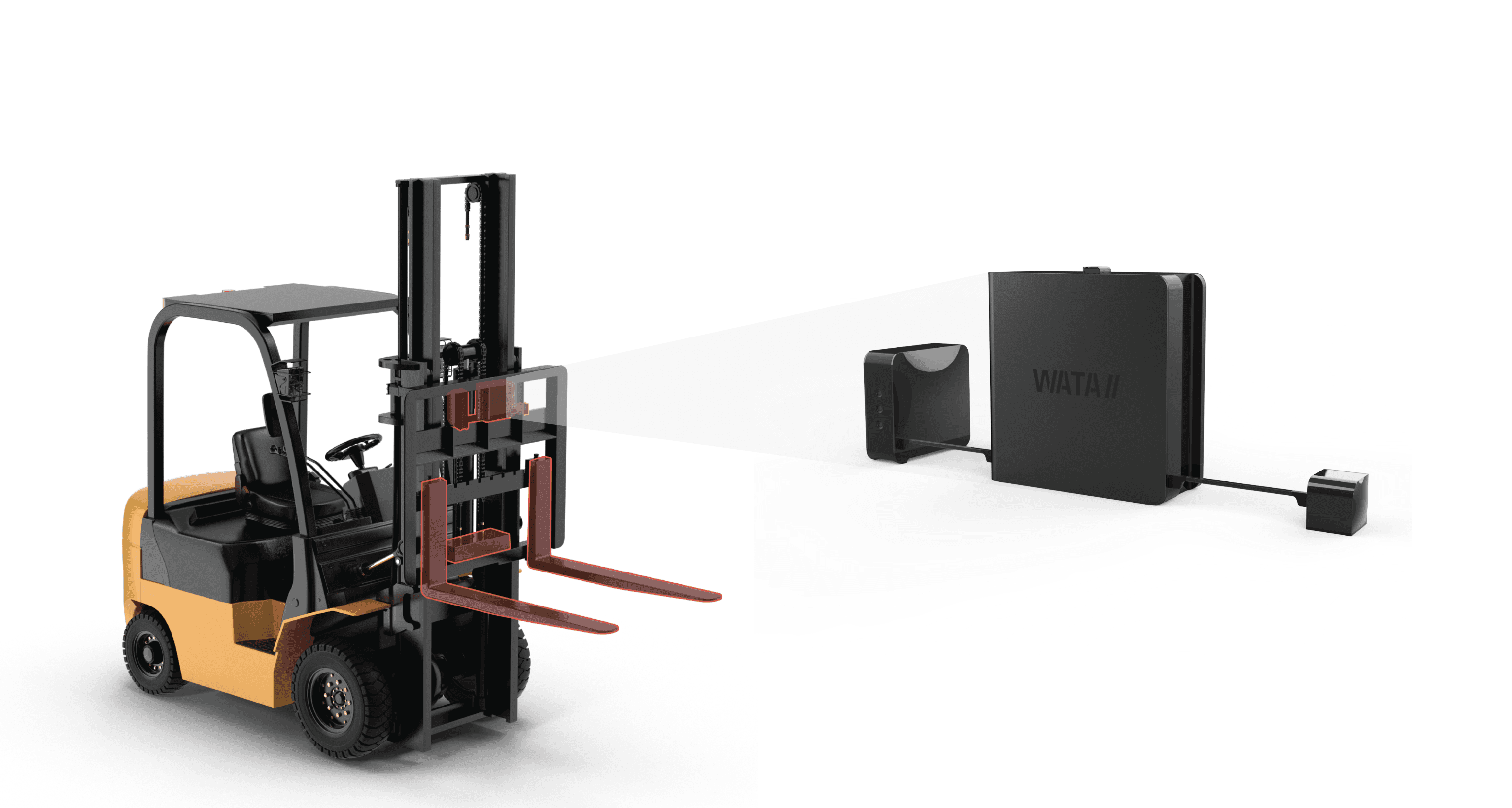
AI Vision Kit
WATA AI's Forklift Motion Recognition and Digital Twin technology precisely implements logistics sites in a twin environment based on real-time data collected through the Vision Kit. It automatically collects and maps detailed motion data such as the movement path of the forklift, the height of the forks, and the steering status through AI-based PCD (Point Cloud Data) analysis. By analyzing the correlation between fixed facilities and moving objects in the workspace in real-time, it visualizes the operating status of the forklift and information about the loaded cargo (weight, shape, location) immediately. This not only prevents collision risks in blind spots in advance but also provides optimized travel routes and working scenarios, dramatically increasing logistics processing speed and work efficiency.
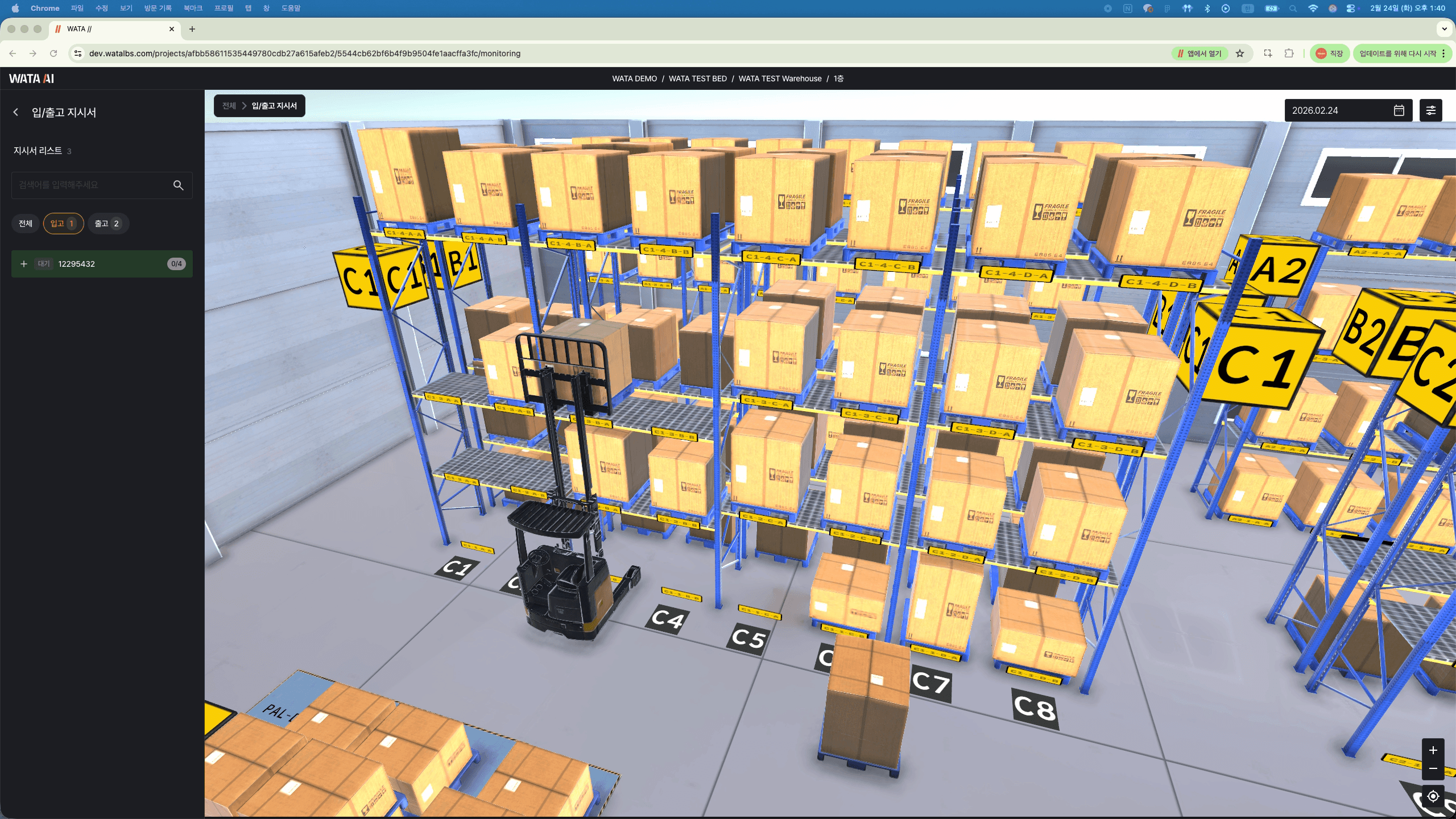
Digital Twin Example
WATA AI's Vision Kit and weight sensors automatically collect, map, and analyze data of fixed and moving objects within the warehouse through AI-based PCD data automatic analysis and integration features. It processes real-time logistics data with precision, labeling and visualizing various data such as spatial information, shelf information, logistics information (size, weight, shape, location), palette material and label count, and the color of loaded cargo. Based on this, it optimizes the inbound and outbound locations and operational flow, significantly improving logistics efficiency and operational stability.
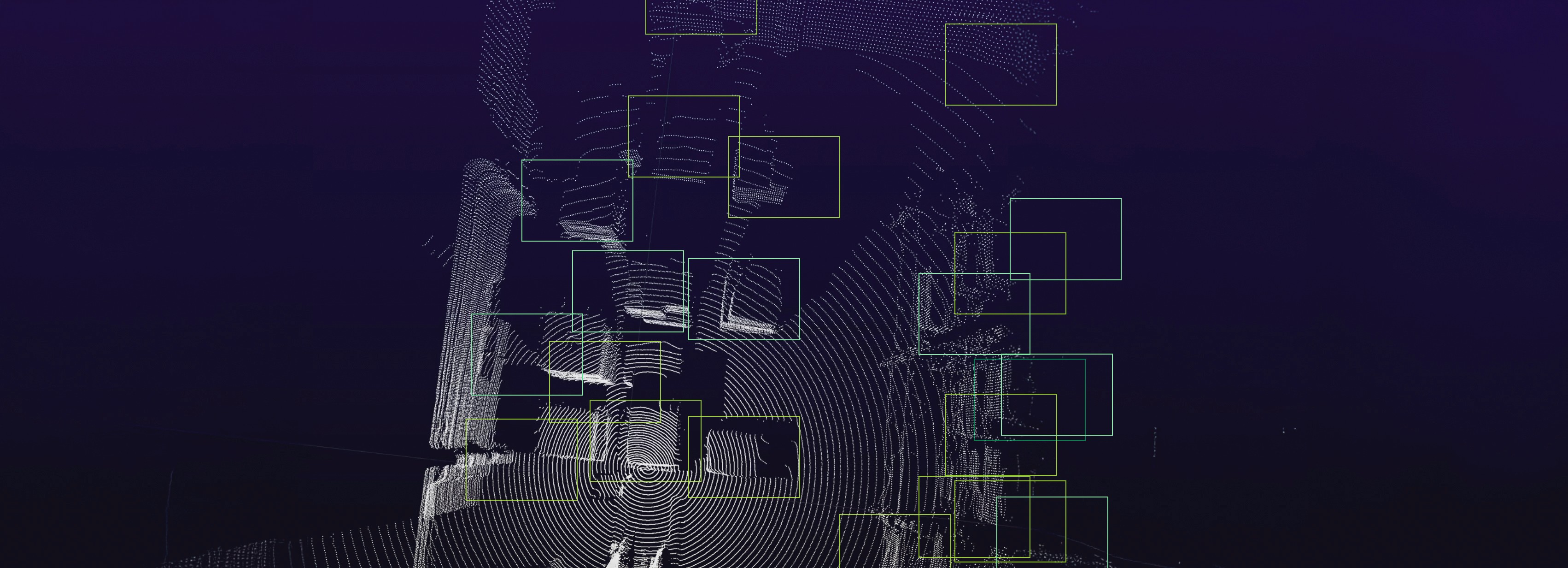
AI Vision technology automatically recognizes various logistics data such as logistics ID, type, size, weight, dimensions, shape, and location information.
It captures information about pallets, boxes, labels, etc., in real-time and converts the logistics flow on-site into digital data.
Additionally, it utilizes Vision AI algorithms to precisely analyze various logistics data.
This allows for accurate analysis and recording of logistics status and operational information using precise data.
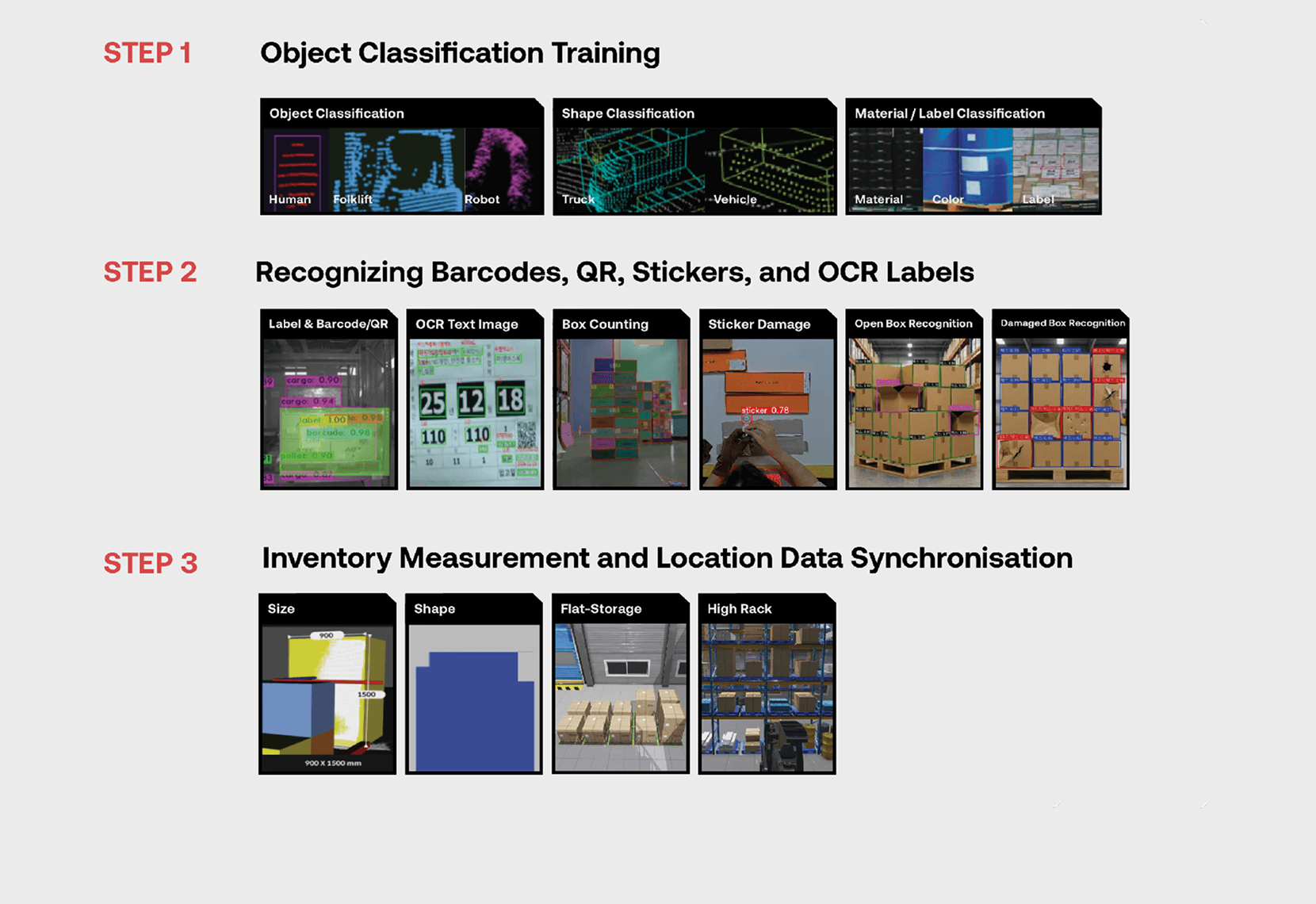
The logistics-optimized object recognition algorithm combines deep learning-based CNN (Convolutional Neural Network) with real-time detection technology from the YOLOv8 series to recognize key logistics objects such as pallets, boxes, roll containers, forklift operators, rack number tags, and more with high precision. It also includes parallel interpretation functions for OCR and QR/barcode, enabling real-time inbound and outbound tracking, automated picking validation, load position estimation, and prevention of duplicate/incorrect loading. This algorithm consists of a customizable learning model based on field video data, supporting functions such as anomaly detection and collision warning.

Logistics information and object recognition deep learning algorithm
Maximize warehouse operational efficiency and productivity based on the collected logistics data and forklift operation information.
Mapping of logistics information and location information
Decision making for optimal loading locations
Work instructions per forklift
Support for optimal travel routes
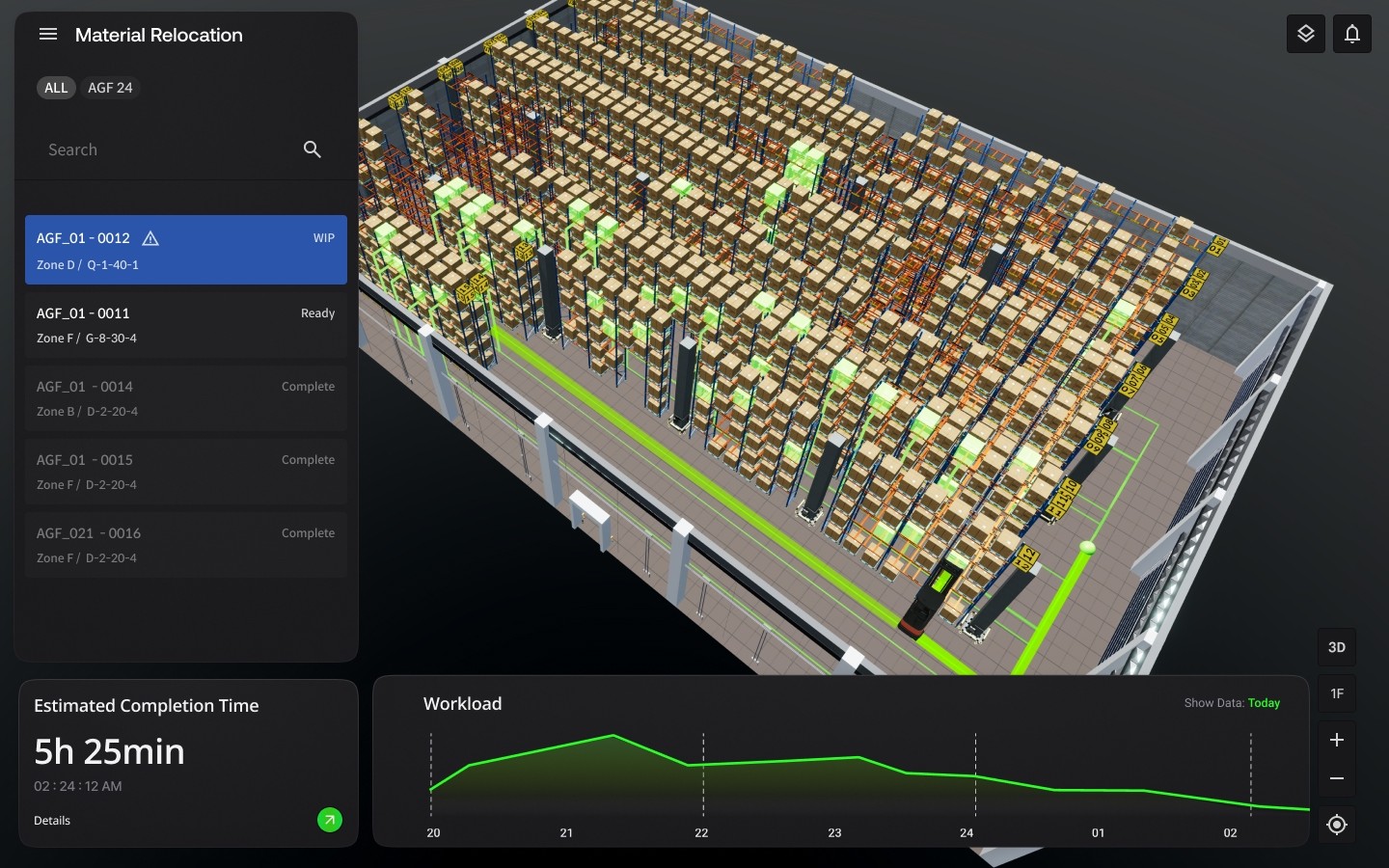
Logistics operation decision support platform screen
AI Inventory audit robot
AI inventory inspection robots autonomously navigate through warehouses and are smart robotic systems that automatically verify logistics inventory.
They recognize product, label, barcode, and location information through cameras and lidar sensors to automatically collect and manage inventory data.
By automating the inventory checks that were previously done manually, they reduce time and improve inventory accuracy.
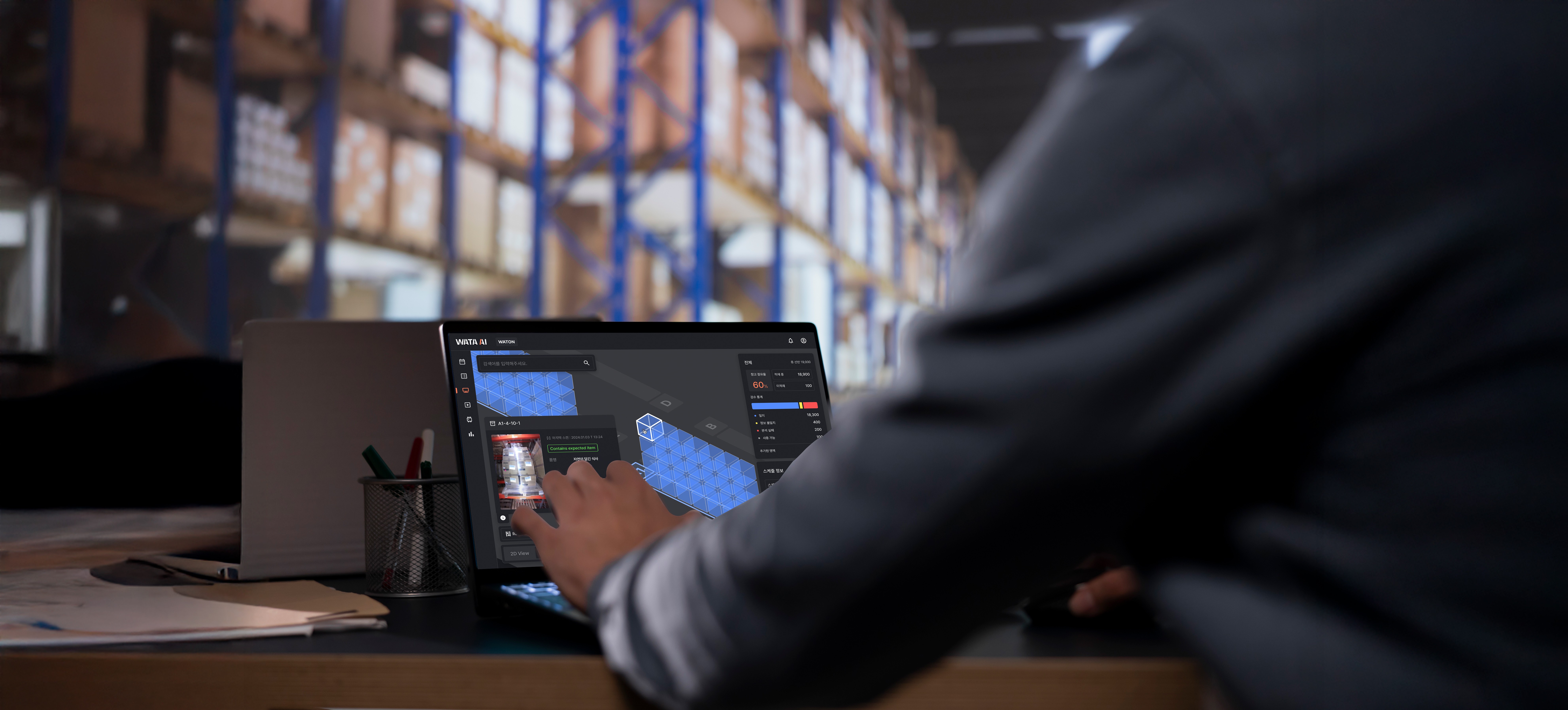
Hybrid DX
WATA AI provides a customized hybrid solution to support the digital transformation of conventional warehouses. It is designed to achieve quick ROI with minimal installation and initial costs while maintaining existing facilities and traffic flows. It also implements company-specific services by securing optimized datasets for various industries. In addition, it supports efficient operations and strengthening competitiveness of client companies through continuous dataset construction and the formation of industry-specific data networks.
Digital Twin
Digital twin systems can integrate any equipment as an asset, regardless of the manufacturer or protocol. Through flexible integration with sensors, controllers, PLCs, and IoT devices, all assets within the process can be replicated in real-time digital space, allowing precise monitoring of operations, status, and anomalies to the millisecond. All data is collected in real-time streaming, and on the digital twin, parameters like equipment temperature, vibration, speed, path, and operational status are implemented through synchronized simulations. This enables early detection of anomalies, predictive maintenance, and process optimization, facilitating AI-based operational intelligence.
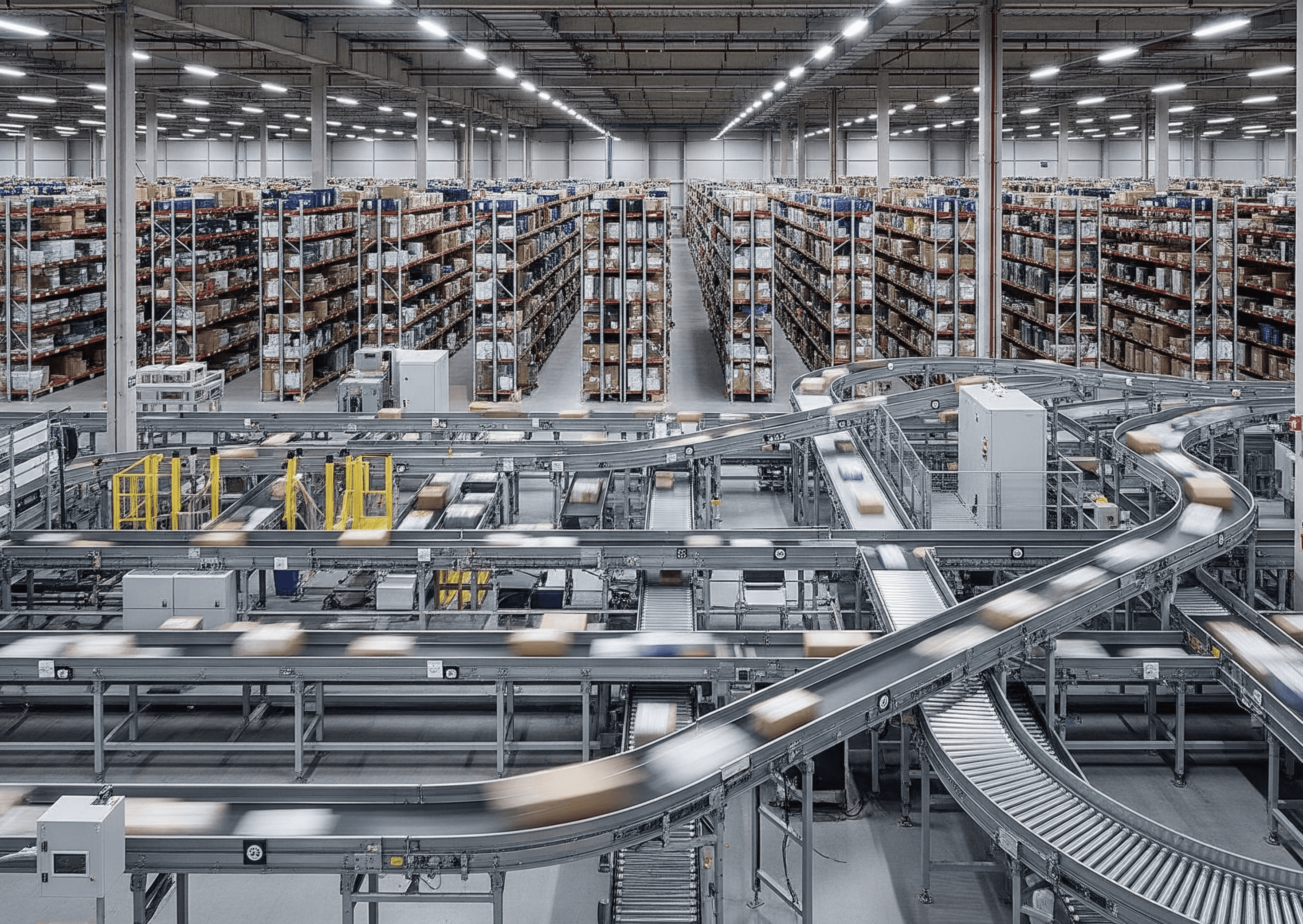
Real-time twin in milliseconds
WATA AI precisely collects and analyzes real-time information on the spatial, logistics, and object movement in industrial sites that are constantly changing, creating a 3D digital twin that reflects reality. This supports real-time synchronization between warehouse sites and logistics data, providing a sustainable digital operating environment that can flexibly respond to changes.
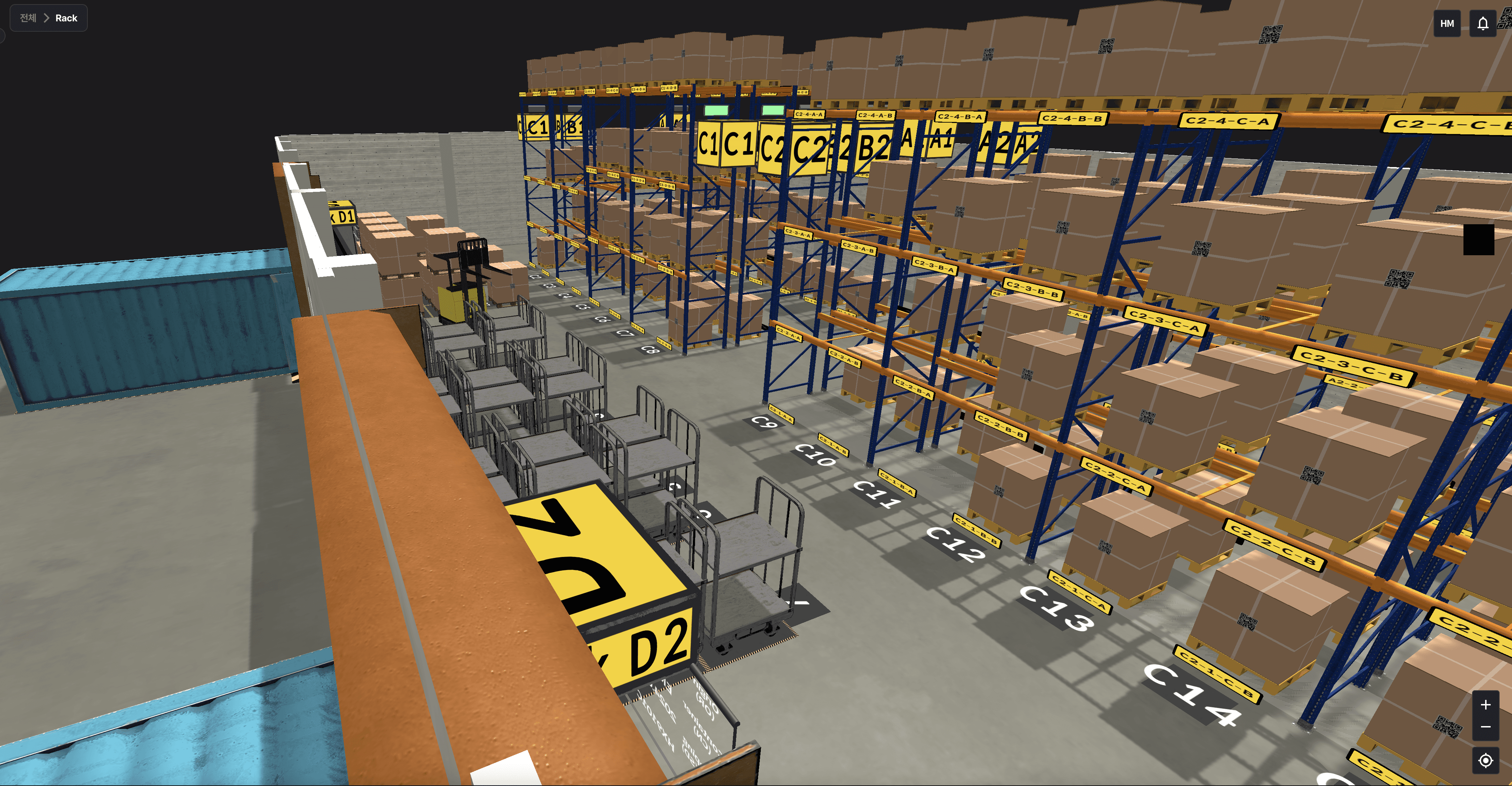
3D digital twin logistics warehouse