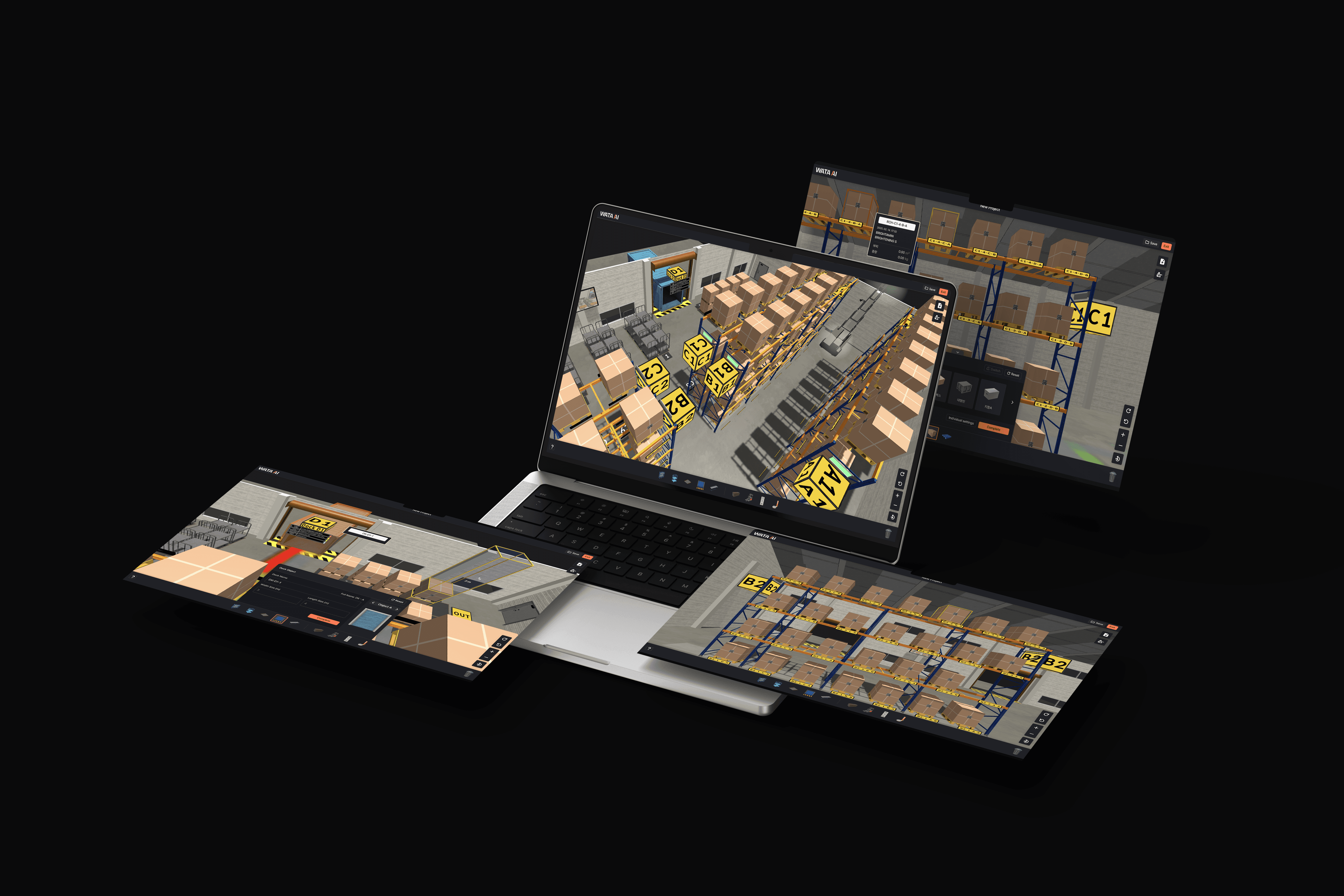
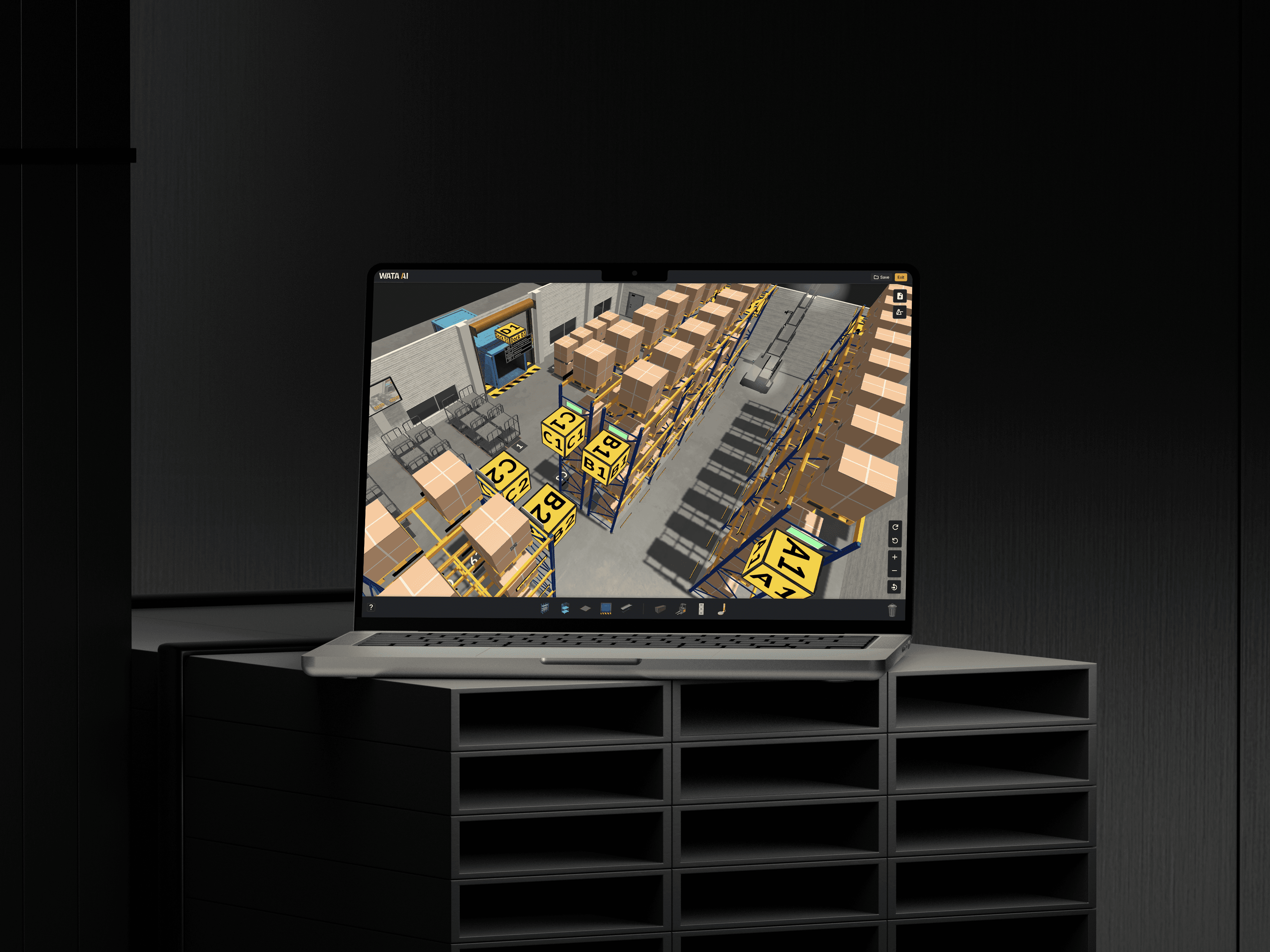
WATON Studio - A 3D editing creation tool that allows for the twin design of industrial spaces.
Category
Software
1
Time consumption
Based on 1000 pyeong


3D production, spatial data

WATA AI separates fixed objects from moving objects in real-time collected spatial information and updates the location information of changed logistics in real-time to implement a sustainable digital twin.
Images
Core features
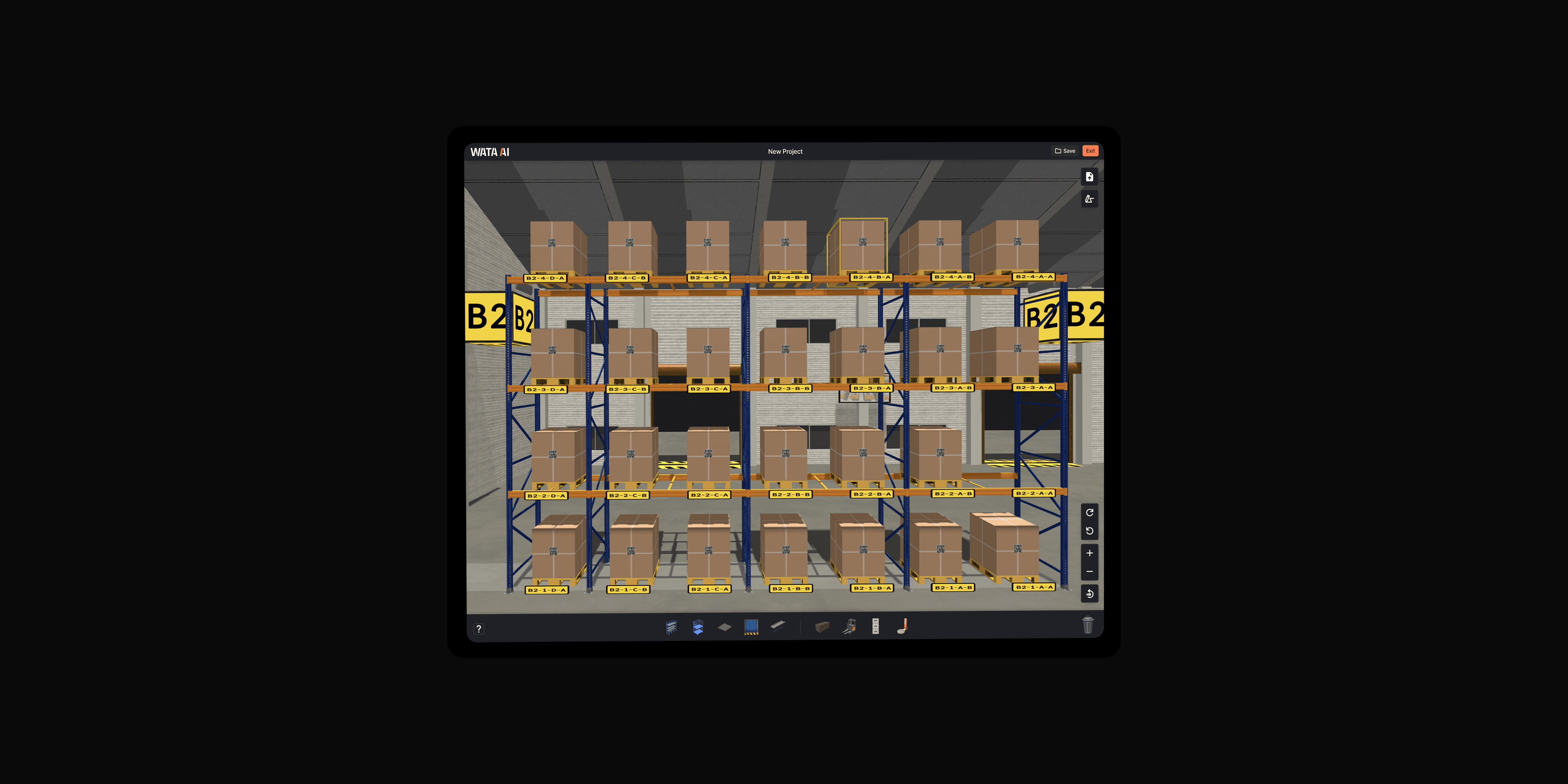
Implementation of Various Warehouse Types
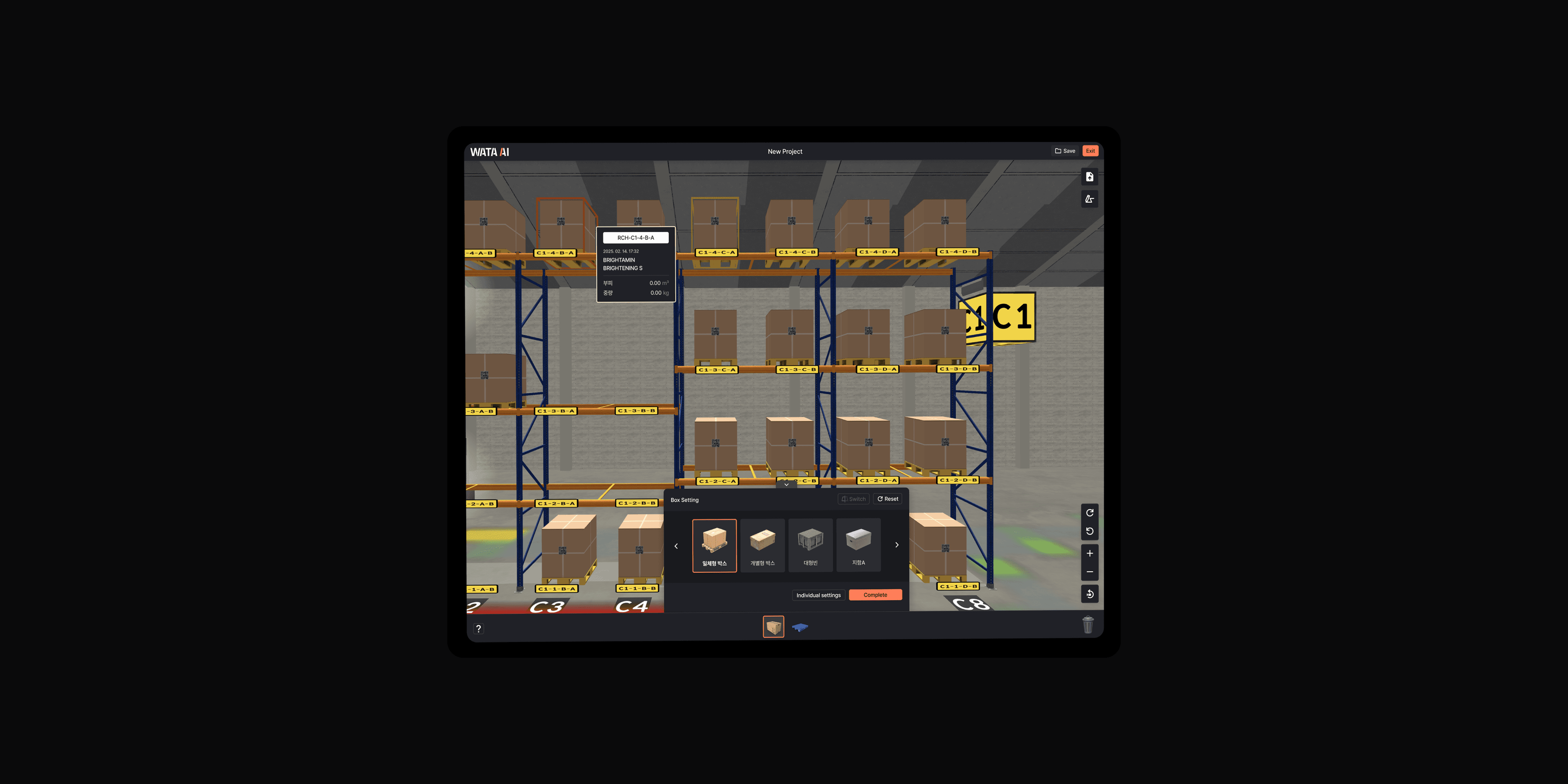
Customization is available with consideration for environments such as import/export warehouses and containers. By utilizing the various types of objects provided, you can configure the layout and options for racks, planes, docks, boxes, and more used in real operations. Freeform design within a 3D space is possible, and you can recreate an environment similar to the warehouse you actually operate.
Integration with Real Data
By linking real data to spaces directly created by users, digital warehouse management becomes possible. Using DB integration, AI Vision Kit, and IoT sensors, logistics movement data is collected in real time, and based on this, tasks are automated to improve worker efficiency. At the same time, unnecessary human errors are reduced, improving the accuracy and reliability of logistics operations.
Easy Editing Features
The names and quantities of various elements can be set in a user-defined manner, and intuitive features commonly provided by standard editing tools—such as copy, paste, and grouping—are supported. Through this, users can minimize inefficient time spent on learning and quickly and efficiently build precise warehouse simulations that closely reflect real environments.