K Company Household Goods Distribution Center

K Company Household Goods Distribution Center

Forklift productivity and route optimization

Category

Case Study

10

%

Reduction in work time required

Industry sector

smart logistics, digital twin

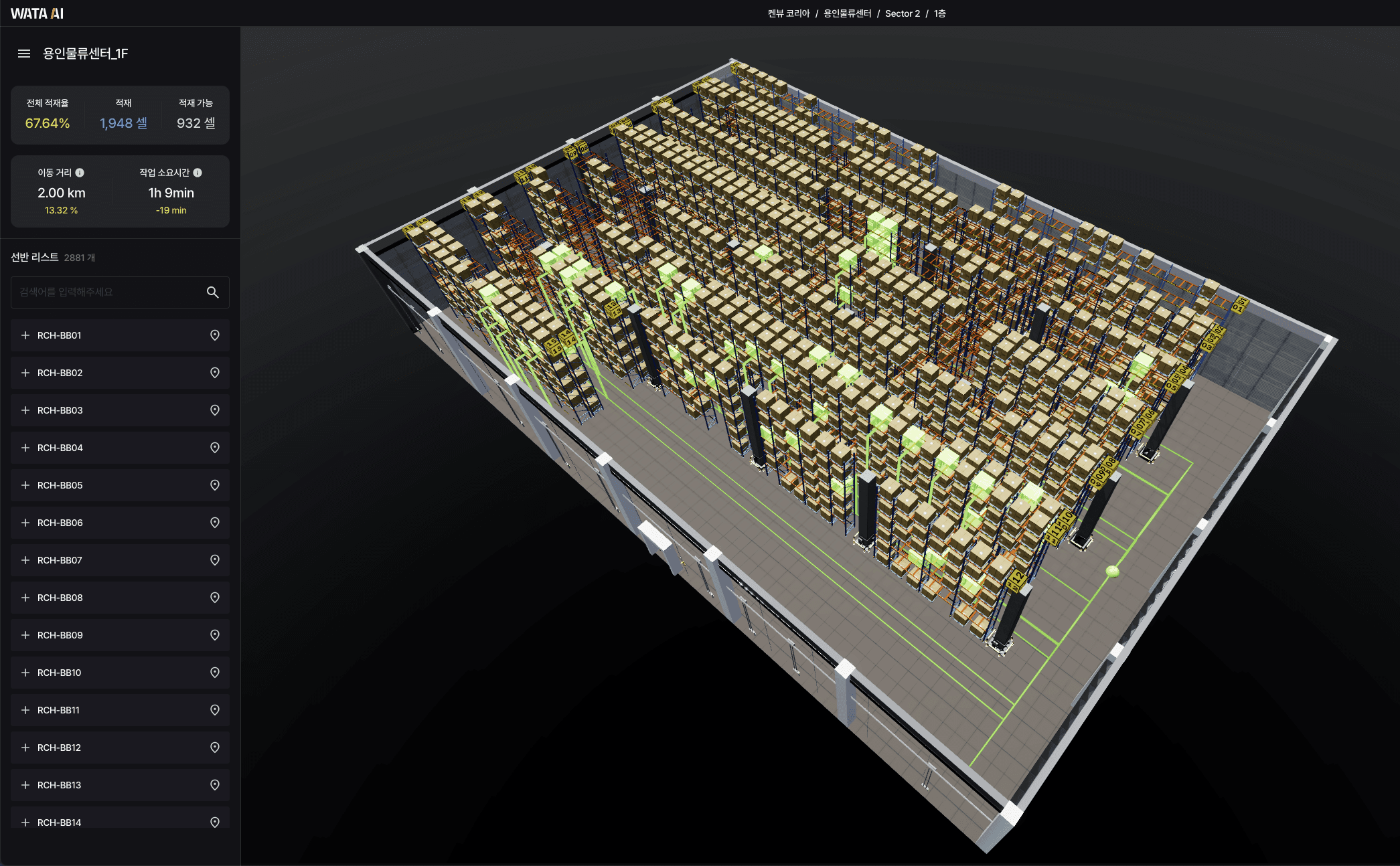
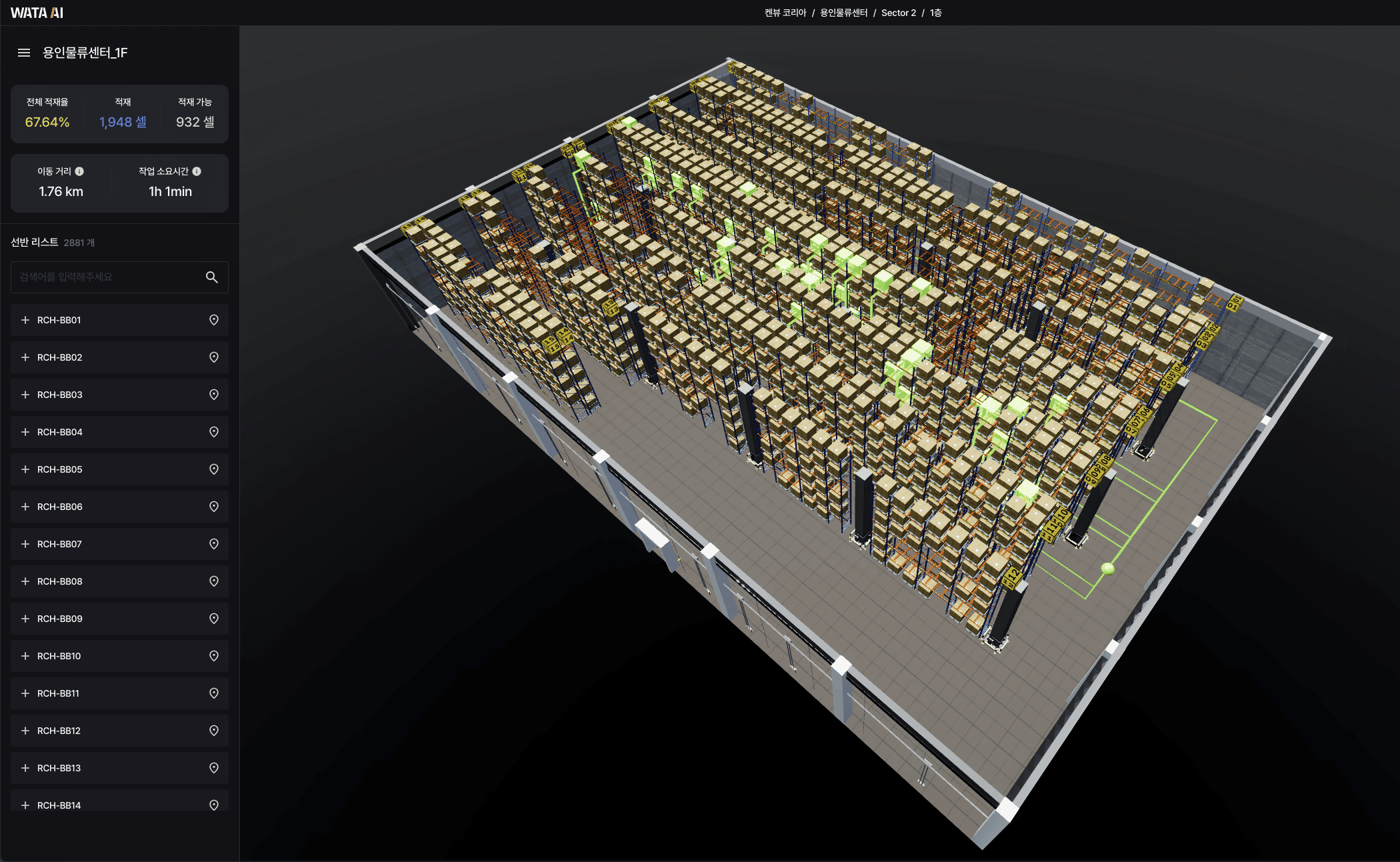
It was implemented to systematize the storage/shipping method that relied on the subjective judgment of forklift operators in order to reduce the overall logistics work time.

Background and Purpose

Background and Purpose

It was initiated to solve the complexity of managing the various standards and expiration dates of utility items and to systematize the stock/release method that relied on the subjective judgment of forklift operators, thereby reducing the overall logistics work time.

It was initiated to solve the complexity of managing the various standards and expiration dates of utility items and to systematize the stock/release method that relied on the subjective judgment of forklift operators, thereby reducing the overall logistics work time.

Images

Solution

Core Introduction Solutions and Changes

Automatically generates optimal operation scenarios within the platform based on secured data.

Classification

Before Introduction (AS-IS)

After Introduction (TO-BE)

Storage Strategy

Random loading based on worker judgment

Expiration/Product-specific automatic algorithm application

Task Distribution

Manual task assignment and radio instructions

Automatic distribution and transmission within the platform

Route Management

Movement route depending on experience

Data-driven forklift route optimization

Batch Management

Fixed shelf layout structure

Automatic shelf placement based on simulation

Introduction effect

Main Benefits of Implementation

① Reduction in Work Time and Labor (Overall Time Reduced by 10%)
  • Short-term Results: By applying the simulation for just 3 days, we have immediately reduced the overall working time by 10%.

  • Scalability: As the operating period accumulates and data becomes more advanced, we expect the reduction to increase further.

② Establishment of Smart Storage Strategy
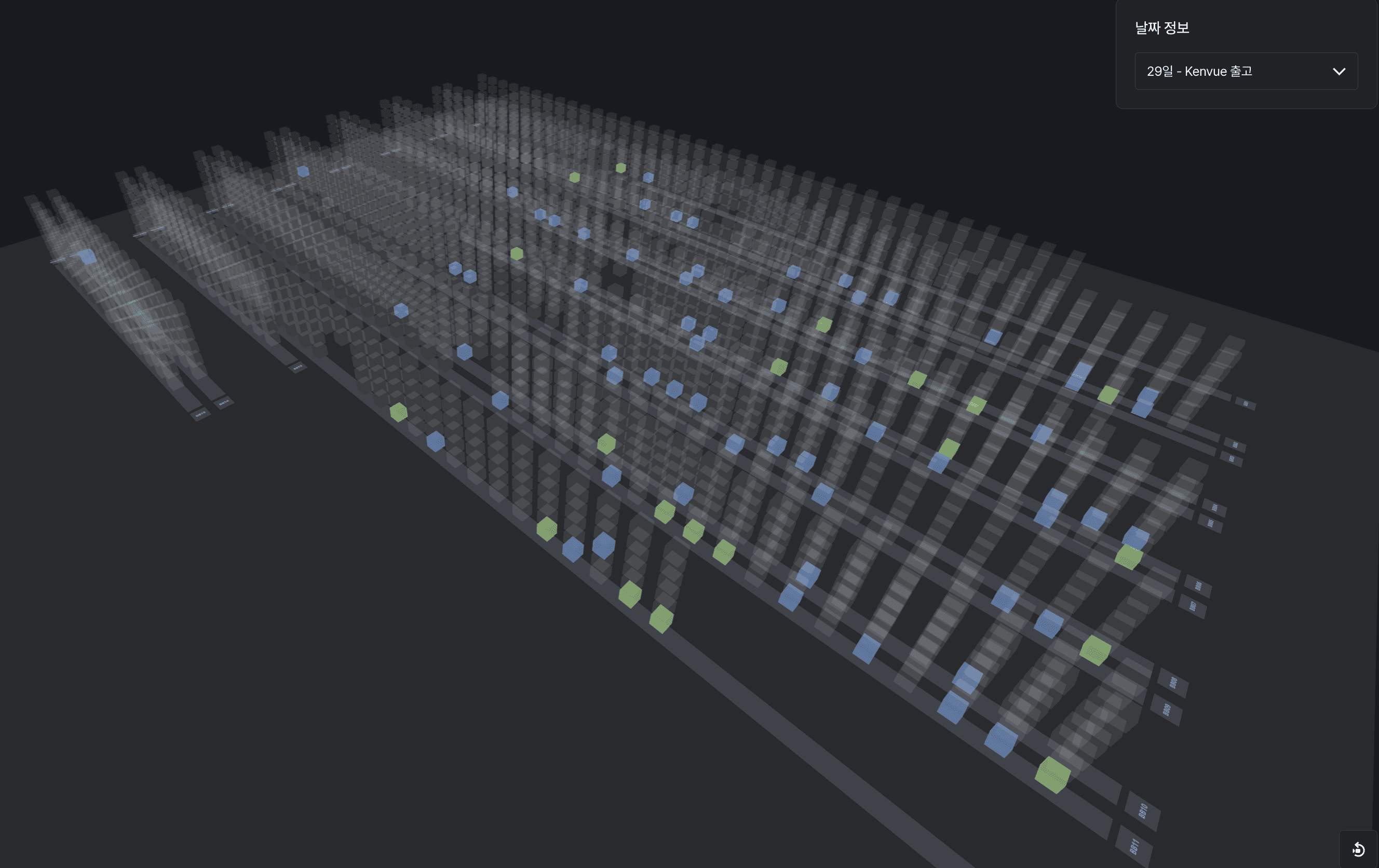
  • Algorithm-Based Placement: Strategic inventory placement, such as positioning products nearing their expiration date or those with high shipping frequency closer to the exit, has been automated.

  • Maximization of Space Utilization: By automating shelf placement, the system minimized dead space caused by human errors.

③ Maximization of Forklift Operation Efficiency
  • Real-time Task Assignment: Instead of paper lists, we directly send incoming and outgoing lists to the forklifts through the system, reducing transmission time.

  • Reduction of Empty Driving: By optimizing the movement routes of the forklifts, unnecessary driving has been minimized, extending battery efficiency and equipment lifespan.