P Company Food Logistics Supply Hub

P Company Food Logistics Supply Hub

Fresh Produce Digital Twin

Introduction video

Category

Case Study

30

%

Increased efficiency of logistics space

Industry sector

Digital Twin

It was introduced at the cosmetics distribution center to optimize the complex logistics arrangement of the high-rack system. In particular, it aims to reduce the time spent searching for specific items within the large warehouse and to maximize operational efficiency by managing storage space in real-time.

Background and Purpose

Background and Purpose

It has been introduced to efficiently manage the diverse product specifications and complex delivery routes unique to food logistics. The key is to move away from the existing methods that rely on visual inspection and to combine volume (CBM) data with digital twins to maximize loading efficiency and eliminate wrong picking at the source.

It has been introduced to efficiently manage the diverse product specifications and complex delivery routes unique to food logistics. The key is to move away from the existing methods that rely on visual inspection and to combine volume (CBM) data with digital twins to maximize loading efficiency and eliminate wrong picking at the source.

Images

Solution

Core Introduction Solutions and Changes

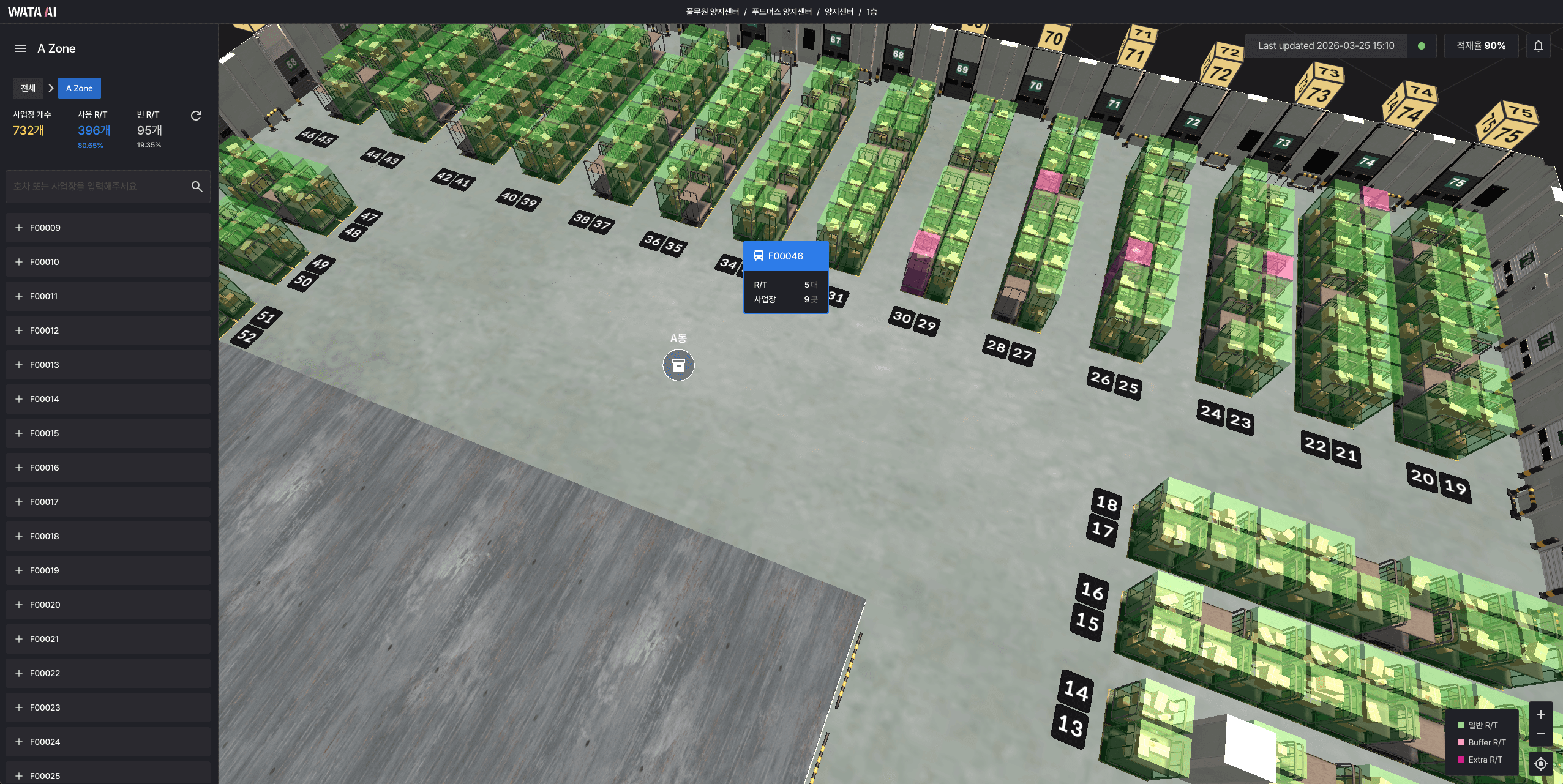
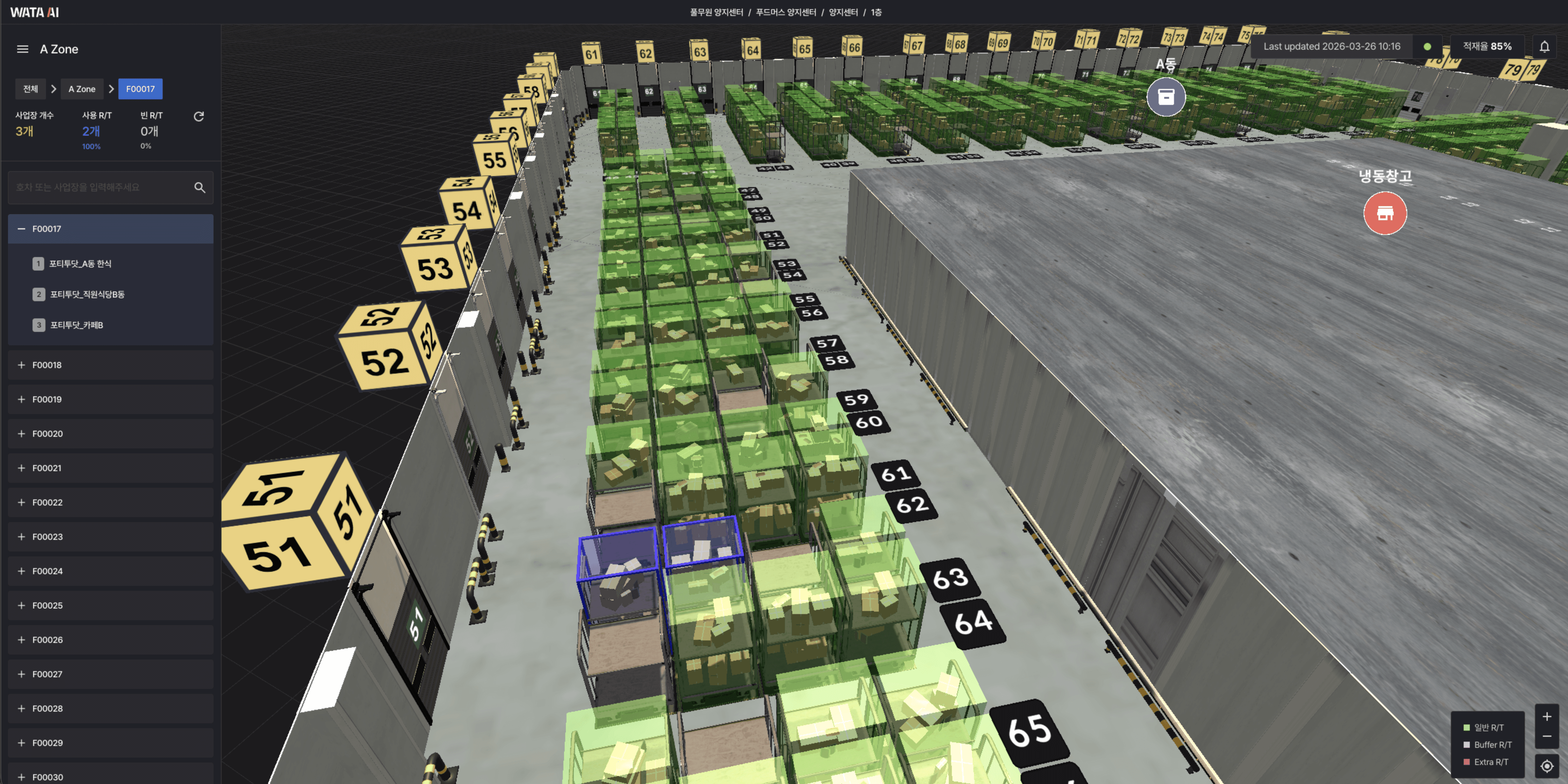
There is a systematic process consisting of a total of 5 steps from data acquisition to actual picking instructions.

Category

Before Implementation (AS-IS)

After Implementation (TO-BE)

Volume Calculation

Visual and empirical estimation

Precision volume automatic calculation based on CBM

Loading Method

Simple loading focused on first-in-first-out

Reverse delivery layout based on delivery distance

Picking Instructions

Paper list and worker judgment

ESL (Smart Tag) and visualization information provided

Location Management

Delayed identification of roll container location

Real-time location monitoring based on LiDAR

Key introduction effects

Key Implementation Benefits

① Maximizing Space and Work Efficiency (approximately 40% improvement in loading space efficiency)
  • Improved Loading Rate: Minimizing empty space based on CBM information has maximized the cargo volume that can be carried by each roll container.

  • Time Reduction: Proactive placement considering delivery order has drastically reduced loading wait times and on-site working hours.

② Improved Accuracy and Error Prevention
  • Real-time Verification: By comparing picking data in real-time, immediate warning alerts are sent in case of mis-picking, preventing quality incidents.

  • Intuitive Guidance: Through ESL and screen navigation, workers can pick accurately at the correct location without additional judgment.

③ Data-driven Operational Optimization
  • Operational Insights: Analyzing monitoring data such as operational rates and loading rates has improved the efficiency of asset operations, including calculating the required number of roll containers.